5 min read

How to Practice Karate at Home: Solo Drills That Work

Simply cannot make it to the dojo today? Here are highly effective and practical drills you can easily practice all alone to stay sharp.
Training

Training

Training Without a Dojo


Unwavering consistency is the true key to success in martial arts. Missing a scheduled dojo session shouldn't ever mean missing your daily training entirely.


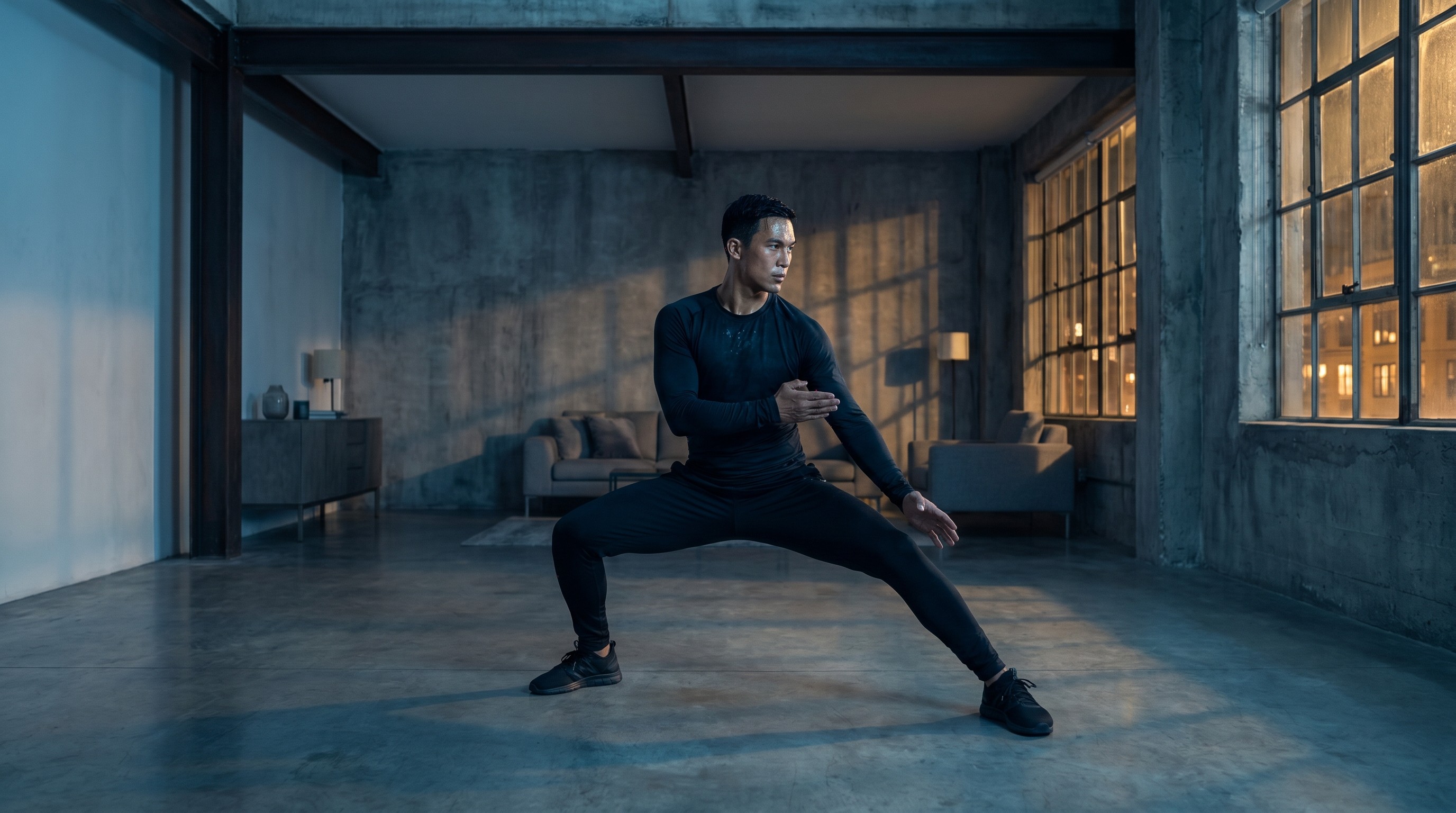
Using just a few square feet of open space in your living room or garage, you can perform slow-motion kata to build incredible balance, or shadow box intently in front of a mirror to fix glaring posture and guard errors.


"Your home is your first dojo. If you cannot discipline yourself in private, you will never succeed in public."


Footwork and Stance Transitions


You absolutely do not need expensive bags or equipment to build world-class movement and agility.


  • Set up a perfectly straight line using painter's tape on the floor.

  • Practice moving smoothly from zenkutsu-dachi (front stance) to kokutsu-dachi (back stance).

  • Ensure your hips remain level, avoiding "bobbing" up and down.


Keeping your posture completely upright and your core engaged throughout the transition builds the leg strength necessary for explosive striking.


Shadow Kumite and Visualization


Set a round timer for standard 3-minute intervals. Close your eyes briefly and vividly imagine a specific, aggressive opponent standing right in front of you.


Throw crisp combinations at the empty air, but focus heavily on evasive head movement, parrying, and stepping out at safe angles of exit. Visualizing incoming attacks forces you to actively train defensive reactions, rather than just mindlessly throwing offensive strikes.


Conditioning Using Household Items


No heavy bag? No problem at all. You can use simple resistance bands looped securely around a heavy door handle to practice your punch retraction speed (hikite).


Fill standard water bottles with wet sand or gravel to serve as light, manageable hand weights while practicing your traditional blocks. Your living room can very easily become a highly comprehensive conditioning center with just a little bit of creativity and willpower.

FAQ

Common Questions

What age can children start karate training?

Our Little Ninjas program is specifically designed for children ages 4 to 6. It focuses on developing basic motor skills, focus, and discipline in a fun, structured environment. For younger children, readiness depends on their ability to follow simple instructions.

Do I need to buy a karate uniform (gi) immediately?

No, you don't need a uniform right away. For your first few classes or trial period, comfortable workout clothes (like sweatpants and a t-shirt) are perfect. Once you decide to enroll officially, we will help you get fitted for your first gi.

I've never done martial arts before. Is karate right for beginners?

Absolutely! Our adult and youth beginner classes are tailored for individuals with zero prior experience. We start with the absolute fundamentals—stances, basic strikes, and blocks—and progress at a pace that is challenging but achievable for everyone.

How does the belt ranking system work?

The belt system is a structured path of progression. Students start as White Belts and learn specific curriculum requirements for each rank. Belt tests (gradings) are held periodically. Progress depends on consistent attendance, effort, and mastery of the required techniques.

Do you prepare students for competitions?

Yes. While our core focus is on personal development and self-defense, we do have a competition team for students interested in sport karate (Kata and Kumite). Competition training is optional and typically available for intermediate and advanced students.

How long are classes, and how often should I attend?

Classes typically run for 45 to 60 minutes depending on the age group and program. For optimal progress, we recommend attending 2 to 3 classes per week. This ensures consistent practice and muscle memory development.

What does the free trial class include?

Light, controlled sparring (Kumite) is introduced gradually as students reach intermediate ranks (usually Orange or Green belt). It is heavily supervised and requires protective gear. Safety is our top priority, and we focus on control and technique over power.

Is sparring mandatory? I'm worried about getting injured.

Our Little Ninjas program is specifically designed for children ages 4 to 6. It focuses on developing basic motor skills, focus, and discipline in a fun, structured environment. For younger children, readiness depends on their ability to follow simple instructions.

FAQ

Common Questions

What age can children start karate training?

Our Little Ninjas program is specifically designed for children ages 4 to 6. It focuses on developing basic motor skills, focus, and discipline in a fun, structured environment. For younger children, readiness depends on their ability to follow simple instructions.

Do I need to buy a karate uniform (gi) immediately?

No, you don't need a uniform right away. For your first few classes or trial period, comfortable workout clothes (like sweatpants and a t-shirt) are perfect. Once you decide to enroll officially, we will help you get fitted for your first gi.

I've never done martial arts before. Is karate right for beginners?

Absolutely! Our adult and youth beginner classes are tailored for individuals with zero prior experience. We start with the absolute fundamentals—stances, basic strikes, and blocks—and progress at a pace that is challenging but achievable for everyone.

How does the belt ranking system work?

The belt system is a structured path of progression. Students start as White Belts and learn specific curriculum requirements for each rank. Belt tests (gradings) are held periodically. Progress depends on consistent attendance, effort, and mastery of the required techniques.

Do you prepare students for competitions?

Yes. While our core focus is on personal development and self-defense, we do have a competition team for students interested in sport karate (Kata and Kumite). Competition training is optional and typically available for intermediate and advanced students.

How long are classes, and how often should I attend?

Classes typically run for 45 to 60 minutes depending on the age group and program. For optimal progress, we recommend attending 2 to 3 classes per week. This ensures consistent practice and muscle memory development.

What does the free trial class include?

Light, controlled sparring (Kumite) is introduced gradually as students reach intermediate ranks (usually Orange or Green belt). It is heavily supervised and requires protective gear. Safety is our top priority, and we focus on control and technique over power.

Is sparring mandatory? I'm worried about getting injured.

Our Little Ninjas program is specifically designed for children ages 4 to 6. It focuses on developing basic motor skills, focus, and discipline in a fun, structured environment. For younger children, readiness depends on their ability to follow simple instructions.

FAQ

Common Questions

What age can children start karate training?

Our Little Ninjas program is specifically designed for children ages 4 to 6. It focuses on developing basic motor skills, focus, and discipline in a fun, structured environment. For younger children, readiness depends on their ability to follow simple instructions.

Do I need to buy a karate uniform (gi) immediately?

No, you don't need a uniform right away. For your first few classes or trial period, comfortable workout clothes (like sweatpants and a t-shirt) are perfect. Once you decide to enroll officially, we will help you get fitted for your first gi.

I've never done martial arts before. Is karate right for beginners?

Absolutely! Our adult and youth beginner classes are tailored for individuals with zero prior experience. We start with the absolute fundamentals—stances, basic strikes, and blocks—and progress at a pace that is challenging but achievable for everyone.

How does the belt ranking system work?

The belt system is a structured path of progression. Students start as White Belts and learn specific curriculum requirements for each rank. Belt tests (gradings) are held periodically. Progress depends on consistent attendance, effort, and mastery of the required techniques.

Do you prepare students for competitions?

Yes. While our core focus is on personal development and self-defense, we do have a competition team for students interested in sport karate (Kata and Kumite). Competition training is optional and typically available for intermediate and advanced students.

How long are classes, and how often should I attend?

Classes typically run for 45 to 60 minutes depending on the age group and program. For optimal progress, we recommend attending 2 to 3 classes per week. This ensures consistent practice and muscle memory development.

What does the free trial class include?

Light, controlled sparring (Kumite) is introduced gradually as students reach intermediate ranks (usually Orange or Green belt). It is heavily supervised and requires protective gear. Safety is our top priority, and we focus on control and technique over power.

Is sparring mandatory? I'm worried about getting injured.

Our Little Ninjas program is specifically designed for children ages 4 to 6. It focuses on developing basic motor skills, focus, and discipline in a fun, structured environment. For younger children, readiness depends on their ability to follow simple instructions.

Karate Academy

ACADEMY

Authentic Japanese martial arts training in Bengaluru since 2010.

FIND US

© 2026 Shinken Karate Academy. All rights reserved.

Karate Academy

ACADEMY

Authentic Japanese martial arts training in Bengaluru since 2010.

FIND US

© 2026 Shinken Karate Academy. All rights reserved.

Karate Academy

ACADEMY

Authentic Japanese martial arts training in Bengaluru since 2010.

FIND US

© 2026 Shinken Karate Academy. All rights reserved.

Create a free website with Framer, the website builder loved by startups, designers and agencies.